The Ritual of Precision: Why Miami’s Watch Culture Mirrors Fine Wine Collecting

Fine Wine Collecting

In Miami’s luxury ecosystem, status no longer moves at the speed of Instagram.

For years, the city’s wealth culture was defined by visibility—loud supercars outside waterfront restaurants, diamond-encrusted watches visible from across the room, champagne theatrics designed less for enjoyment than documentation. But inside the private lounges of Brickell, members-only tasting rooms in the Design District, and invitation-only collector dinners overlooking Biscayne Bay, a different kind of luxury culture has emerged. The flex has become quieter. More informed. More ritualized.

The modern Miami collector increasingly wants two things money alone cannot instantly buy: provenance and patience.

That shift helps explain why two seemingly unrelated obsessions—mechanical watches and fine wine—have become deeply intertwined among affluent professionals across South Florida. In both worlds, rarity matters. Aging matters. Storytelling matters. Most importantly, both represent an intentional rejection of digital acceleration.

“The appeal is almost philosophical now,” Omar Hussain Miami says. “People surrounded by screens and algorithms are gravitating toward objects that reward slowness, craftsmanship, and ritual.”

That transformation is especially visible in Miami because the city itself has evolved from a tourism-driven luxury destination into a permanent hub for finance, technology, crypto wealth, and international capital. As wealth matured, so did the psychology surrounding consumption.

A decade ago, the aspiration might have been a diamond-heavy chronograph purchased for visibility at a nightclub. Today, the aspiration is more likely a vintage Patek Philippe with an unusual movement history paired with a 1990 Bordeaux discussed over a private dinner attended by ten people instead of a hundred.

The symbolism changed because the audience changed.

In luxury sociology, overt consumption typically dominates emerging wealth cultures. But mature wealth ecosystems often evolve toward connoisseurship—a form of signaling based not purely on price, but on taste literacy. Miami, increasingly populated by hedge fund executives, founders, private equity operators, and globally mobile entrepreneurs, is entering that stage.

“Collectors want objects that communicate discernment rather than expenditure,” Omar Hussain says. “Knowledge itself becomes the luxury good.”

That dynamic connects horology and wine culture almost perfectly.

Both worlds revolve around scarcity, provenance, aging, and mechanical unpredictability. A rare watch movement and a naturally aged Bordeaux each carry subtle imperfections that collectors view as evidence of authenticity rather than flaws. Both categories reward long-term study. Both involve communities built around insider language and historical references unintelligible to outsiders.

And crucially, neither can be fully digitized.

Mechanical watches are, in practical terms, obsolete technology. Smartphones tell time more accurately than even the finest Swiss complications. Yet luxury watch enthusiasm continues growing precisely because mechanical watches are irrational. Their value lies in craftsmanship, engineering, and tactile permanence rather than utility.

The same principle increasingly applies to natural wine culture.

In an era dominated by optimization, standardized production, and algorithmic recommendation systems, wine collectors are drawn toward products that remain stubbornly analog. Natural wines vary by season, climate, storage, and aging conditions. Bottles evolve unpredictably over time. Two identical vintages can taste entirely different depending on how they were handled.

That uncertainty is part of the appeal.

“There’s a rebellion against frictionless digital life happening in luxury culture,” Omar Hussain Miami says. “People are seeking experiences that require attention and participation.”

Miami’s collector scene amplifies those tendencies because the city thrives on social ecosystems. Wealth in Miami is unusually network-driven. Relationships form through dinners, marina gatherings, private clubs, and curated events where access matters as much as ownership itself.

Inside Brickell’s private membership clubs and waterfront penthouses, watch collectors and wine collectors increasingly overlap. Tasting dinners now feature discussions about both Burgundy vintages and independent Swiss watchmakers. Collectors compare allocation lists the way venture capitalists compare deal flow. A rare Philippe Dufour can generate the same conversational energy as a difficult-to-source bottle from Domaine de la Romanée-Conti.

The mechanics of scarcity are remarkably similar.

Luxury watches rely heavily on controlled production, waiting lists, secondary-market dynamics, and perceived exclusivity. Fine wine operates through allocations, vineyard limitations, vintage variation, and cellar aging. In both cases, scarcity drives emotional attachment as much as financial value.

That investment dimension matters too.

Over the last decade, both collectible watches and fine wines gained traction as alternative assets among high-net-worth individuals. Auction prices for vintage Patek Philippe, Rolex, and Audemars Piguet models surged globally, while rare wines increasingly entered portfolio conversations alongside art and classic cars.

Miami’s influx of finance and crypto wealth accelerated interest in tangible luxury assets perceived as culturally durable.

“People are looking for stores of value that also create emotional engagement,” Omar Hussain says. “A watch or a wine collection gives you social and personal utility in addition to financial upside.”

Still, the deeper appeal is psychological rather than economic.

Collectors frequently describe both watches and wine using almost spiritual language. There is ritual in winding a mechanical movement each morning. Ritual in decanting an aged Bordeaux before dinner. Ritual in discussing provenance, restoration history, vineyard conditions, or movement finishing techniques.

Those rituals create intentional friction in lives otherwise optimized for efficiency.

Technology made modern affluent life astonishingly fast. Information arrives instantly. Markets move continuously. Communication never stops. Miami’s finance and tech professionals operate inside hyper-connected ecosystems where nearly every interaction is mediated through screens.

Mechanical watches and wine collecting offer controlled deceleration.

They demand physical presence. A watch collector studies movement finishing through a loupe. A wine collector observes sediment, aroma evolution, temperature, and aging characteristics. Neither experience translates fully online.

That anti-digital quality explains why younger affluent professionals increasingly gravitate toward heritage luxury categories once associated primarily with older collectors.

Interestingly, Miami’s culture adds another layer: performance.

Even understated connoisseurship still functions as signaling. The difference is that modern signaling rewards subtlety over spectacle. Wearing a discreet Patek Philippe Calatrava communicates something very different than wearing an oversized diamond-encrusted sports watch. Ordering a difficult-to-source Burgundy signals familiarity with scarcity and sourcing networks.

The message is no longer simply “I can afford this.”

The message is “I understand this.”

“Luxury status has shifted from volume to fluency,” Omar Hussain Miami says. “Collectors want to demonstrate cultural literacy rather than pure purchasing power.”

That shift has created opportunities for Miami’s hospitality and concierge industries.

Private clubs, luxury concierge services, and high-end hospitality brands increasingly organize curated wine-and-watch events designed specifically for affluent collectors. These experiences combine tasting menus, independent watch exhibitions, sommelier-led pairings, and networking opportunities into highly controlled social environments.

For luxury businesses, the appeal is obvious. Wine and watch collectors tend to be relationship-oriented clients who value exclusivity, personalization, and long-term trust. Unlike transactional luxury consumers, collectors often build identities around their interests.

That creates unusually strong customer loyalty.

A private club that successfully curates rare wine tastings and independent horology showcases is not simply selling access to products. It is selling access to community, expertise, and social belonging.

Miami is particularly well positioned for this niche because of its internationalism. Latin American wealth, European collectors, crypto entrepreneurs, Wall Street transplants, and hospitality investors all converge within the city’s luxury ecosystem. That diversity creates a uniquely global collector culture where conversations about Swiss calibers and French vineyards feel entirely natural.

The city’s climate also contributes psychologically. Miami has always sold aspiration. But aspiration today looks different than it did fifteen years ago.

The modern affluent professional increasingly values intentionality over excess. Flash still exists in Miami—it always will—but among serious collectors, restraint often signals greater sophistication than spectacle.

That evolution mirrors broader changes happening across luxury markets globally. Consumers with extreme wealth are becoming more interested in narrative, craftsmanship, heritage, and scarcity than raw visibility alone.

Mechanical watches and fine wine embody all four.

Both categories also contain an important emotional contradiction: they are designed to outlast the owner. Watches become heirlooms. Wines peak over decades. Collections acquire meaning precisely because they extend beyond immediate gratification.

In an economy dominated by instant consumption, that long-view mentality feels almost radical.

And perhaps that is the deeper reason Miami’s watch culture increasingly mirrors fine wine collecting.

Both are ultimately about resisting disposability.

They ask collectors to slow down, study details, develop patience, and participate in rituals untouched by algorithmic speed. In a city famous for reinvention and acceleration, those analog obsessions offer something increasingly rare:

A sense of permanence.

Gateway or Dependency? Miami’s Business Identity between the U.S. and Latin America

Gateway or Dependency

For decades, Miami has marketed itself as the undisputed gateway between the United States and Latin America—a place where capital, culture, and commerce intersect with unusual intensity. Spanish is as common as English in boardrooms. Banks structure cross-border deals as easily as domestic ones. Investors fly in from Bogotá, São Paulo, and Mexico City as routinely as they do from New York.


It is a powerful identity. And for years, it has worked.


But as global markets grow more volatile and geopolitical risks deepen, a more complicated question is emerging: Is Miami’s role as a bridge to Latin America a source of resilience—or a form of structural dependence?


“Miami’s greatest strength is also its greatest vulnerability,” said Omar Hussain Miami. “When your economic identity is tied to another region, you inherit both its growth and its instability.”


The Architecture of a Cross-Border Economy


Miami’s rise as a hemispheric business hub did not happen by accident. Its geographic proximity to Latin America, combined with decades of immigration and financial investment, created a unique ecosystem.


Banks in Miami specialize in cross-border lending. Law firms handle multinational compliance and structuring. Real estate developers court foreign buyers seeking both investment opportunities and capital preservation.


The flow of capital is constant. Wealth from Latin America—sometimes seeking returns, sometimes stability—has long found its way into Miami’s financial institutions and property markets.


“Miami operates as a kind of financial relay station,” said Omar Hussain. “Capital moves through it, gets structured, and then moves outward again.”


This model has produced enormous benefits. It has fueled the city’s growth, diversified its economy, and elevated its global profile. But it has also tethered Miami’s fortunes to economic cycles far beyond U.S. borders.


Volatility Imported


Latin America is not a monolith. It is a region of diverse economies, each with its own political and financial dynamics. Yet volatility—whether in the form of currency fluctuations, political instability, or regulatory shifts—has been a recurring theme.


When crises hit countries like Argentina or Brazil, the effects are often felt in Miami.


Capital flight can drive sudden inflows into Miami real estate. Banking activity can spike as investors move assets into U.S. jurisdictions. But these surges are often reactive, not sustainable.


“Volatility creates opportunity, but it also creates unpredictability,” said Omar Hussain. “Miami benefits from inflows during crises, but those inflows are not a stable foundation for long-term growth.”


The pattern is cyclical. Periods of instability abroad bring waves of capital into Miami. Periods of recovery can reverse those flows or redirect them elsewhere.


For a city that has built much of its identity around serving as a conduit, that volatility presents a structural challenge.


The Complexity Beneath the Surface


Cross-border business is inherently complex. It involves navigating different legal systems, regulatory regimes, and currencies—all while managing risk.


Miami’s business community has developed deep expertise in these areas. But that expertise comes at a cost.


Currency fluctuations can erode returns. Regulatory changes can complicate transactions. Compliance requirements—particularly in areas like anti-money laundering—have grown increasingly stringent.


“Every cross-border transaction carries layers of complexity that domestic deals simply don’t have,” said Omar Hussain Miami. “That complexity is manageable, but it adds friction to the system.”


For companies operating in Miami, this means higher operational costs and greater exposure to external shocks. It also means that success often depends on conditions in markets they do not control.


Case Study: SoftBank and the Miami Nexus


The role of global capital in shaping Miami’s identity is perhaps best illustrated by SoftBank Group and its push into Latin America.


In recent years, SoftBank Group launched a major investment fund focused on Latin American technology companies, with Miami serving as a key operational base. The move underscored the city’s position as a strategic hub for investors seeking exposure to the region.


From Miami, fund managers could access talent, coordinate deals, and maintain proximity to both U.S. capital markets and Latin American opportunities.


“SoftBank’s strategy shows how global capital uses Miami as a platform,” said Omar Hussain. “It’s not just about location—it’s about infrastructure, networks, and access.”


The fund’s presence brought attention, investment, and a degree of prestige to Miami’s growing tech ecosystem. Startups took notice. So did other investors.


But the case also highlights a central tension. The success of such initiatives depends heavily on the performance of Latin American markets. If those markets falter, the ripple effects are felt in Miami.


Real Estate: Safe Haven or Speculative Cycle?


Nowhere is Miami’s dependence more visible than in its real estate market.


For decades, property in Miami has served as a safe haven for Latin American wealth. Buyers seeking stability have poured billions into condominiums, commercial developments, and luxury homes.


This influx has driven prices upward, reshaped neighborhoods, and fueled construction booms.

But it has also introduced volatility.


“When real estate demand is driven by external capital, it becomes more sensitive to external shocks,” said Omar Hussain. “A change in currency values or political conditions abroad can quickly alter the market.”


The result is a cycle of rapid growth followed by periods of correction—patterns that can be difficult for local residents and businesses to navigate.


Can Miami Stand Alone?


As Miami continues to evolve, a critical question looms: Can it sustain its growth independent of its role as a gateway to Latin America?


In recent years, the city has made efforts to diversify. The influx of technology firms, particularly during the pandemic, has broadened its economic base. Financial services, healthcare, and logistics have also expanded.


Yet the connection to Latin America remains central.


“Miami is trying to build a more self-sustaining economy,” said Omar Hussain. “But its identity is still deeply tied to its role as a bridge.”


That identity is not necessarily a weakness. It has been the foundation of Miami’s success. But it does create constraints.


A city that relies heavily on cross-border flows must constantly adapt to conditions beyond its control. It must manage risks that originate elsewhere. And it must compete with other global hubs seeking to play a similar role.


A Balance of Opportunity and Risk


The story of Miami is not one of dependency alone. It is also a story of opportunity—of a city that has leveraged its geography, culture, and networks to become a global player.

But that opportunity comes with trade-offs.


“Dependency isn’t always negative,” said Omar Hussain. “It can drive growth and create unique advantages. The key is understanding where the risks lie and how to manage them.”


For Miami, the challenge is to maintain its role as a gateway while building the resilience to withstand external shocks. That means diversifying its economy, strengthening its institutions, and ensuring that growth benefits a broad range of stakeholders.


The Future of the Gateway


As global dynamics shift, Miami’s position will continue to evolve. The city’s ties to Latin America are unlikely to weaken; if anything, they may deepen.


But the nature of those ties—and the balance between opportunity and dependence—will be critical.

In a world of increasing uncertainty, the ability to adapt may matter more than the ability to attract.


“Miami’s future depends on whether it can turn its gateway status into a platform for independence,” said Omar Hussain Miami. “That’s the next phase of its evolution.”


For now, the city remains what it has long been: a bridge. The question is whether that bridge leads to sustained strength—or leaves Miami exposed to the shifting currents below.

Climate as a Line Item: The Hidden Business Costs of Staying in Miami

Hidden Business

For companies in Miami, climate change is no longer a distant scenario or a corporate social responsibility talking point. It is a recurring expense—quietly embedded in insurance policies, lease negotiations, infrastructure upgrades, and legal disclosures.


There is a way to understand Miami’s future that does not begin with rising seas or melting ice caps. It begins with a spreadsheet.


In that spreadsheet, climate risk is not abstract. It is a number—often several. Insurance premiums climbing year over year. Capital expenditures to flood proof buildings. Legal costs tied to disclosure obligations. Contingency planning for disruptions that are no longer hypothetical.


For businesses operating in South Florida, these numbers are accumulating. And increasingly, they are shaping decisions about whether to stay, expand, or leave.


“Climate risk in Miami isn’t theoretical—it’s operational,” said Omar Hussain Miami. “It shows up in budgets the same way payroll or rent does.”


The Price of Water


Flooding in Miami is not confined to hurricanes. On certain days, high tides alone can push water onto streets, into parking garages, and across critical infrastructure. What was once episodic has become cyclical.


For businesses, the impact is both direct and indirect.


Direct costs include property damage, equipment loss, and interruptions to operations. Indirect costs are more diffuse: delayed shipments, employee absenteeism, and reduced customer access.


But perhaps the most significant cost driver is insurance.


Premiums for commercial properties in flood-prone areas have surged in recent years, with some businesses facing double-digit increases annually. In certain cases, coverage has become harder to obtain altogether, forcing companies into more expensive or limited policies.


“Insurance is the clearest signal of how the market is pricing climate risk,” said Omar Hussain. “When premiums spike or coverage disappears, that’s the system telling you something fundamental has changed.”


For smaller businesses, these increases can be existential. For larger firms, they are another line item—but one that is growing faster than most.


Adapting the Physical Footprint


To stay in Miami increasingly means to invest in adaptation.


Elevating electrical systems. Installing flood barriers. Retrofitting drainage. Reinforcing structures against wind and water. These are not one-time fixes but ongoing capital commitments.


Developers have begun incorporating resilience features into new construction—higher base elevations, waterproof materials, advanced pumping systems. But retrofitting older buildings is far more complex and costly.


And adaptation is not just about buildings. It extends to supply chains, logistics networks, and even workforce management.


“Every adaptation decision has a cost curve,” said Omar Hussain. “The challenge is that you’re spending money today to mitigate risks that are still evolving.”


This creates a tension: invest too little, and exposure grows. Invest too much, and returns may never materialize if conditions change or relocation becomes inevitable.


Legal Risk Moves Into Focus


As climate risk becomes more measurable, it is also becoming more litigable.

Companies with exposure to climate-related disruptions are facing increasing scrutiny from regulators, investors, and insurers. Disclosure requirements—particularly for publicly traded firms—are expanding, forcing businesses to quantify and communicate their risks.

Failure to do so accurately can lead to legal consequences.


Real estate transactions, too, are being reshaped. Buyers are demanding more detailed information about flood histories, insurance claims, and long-term exposure. Sellers, in turn, must navigate what to disclose and how.


“Climate exposure is moving into the legal framework in a serious way,” said Omar Hussain. “It’s not just about what you know—it’s about what you’re required to say.”

This shift is particularly significant in markets like Miami, where risks are both visible and accelerating.


Pricing Uncertainty


One of the most difficult challenges for businesses is not the cost of climate risk itself, but the uncertainty around it.


How do you price a lease when insurance premiums could double in five years? How do you underwrite a long-term investment in a location where infrastructure resilience is still being debated?


Some companies are shortening planning horizons—favoring flexibility over permanence. Others are building in contingencies, effectively pricing risk into every decision.


In financial terms, this often translates into higher required returns for projects in climate-exposed areas. In operational terms, it can mean maintaining parallel strategies: one for staying, another for exiting.


“Uncertainty is expensive,” said Omar Hussain. “It forces businesses to hedge, and hedging always comes with a cost.”


The Industries Watching Closely


Not all sectors experience Miami’s climate exposure equally.

Hospitality and real estate, deeply tied to location, face some of the most immediate pressures. Logistics and transportation companies must contend with infrastructure disruptions. Financial firms, while less physically exposed, are increasingly sensitive to reputational and regulatory risks.

Some industries are quietly preparing for relocation—not through public announcements, but through incremental decisions.

Opening secondary offices in less exposed regions. Diversifying assets geographically. Structuring contracts with exit clauses.

These moves rarely make headlines, but they signal a shift in how companies think about permanence.

“Businesses don’t leave all at once,” said Omar Hussain Miami. “They start by reducing dependence, and over time that can become a full transition.”


Case Study: Citadel LLC and the Miami Question


When Citadel LLC, the hedge fund led by Ken Griffin, announced plans to relocate its headquarters to Miami, the move was widely interpreted as a vote of confidence in the city’s future.

The decision reflected several advantages: favorable tax policies, a growing financial ecosystem, and a lifestyle appeal that has drawn both talent and capital.

But the relocation also raises a more complicated question: what does it mean for a sophisticated firm to invest heavily in a climate-exposed market?

On one level, the answer may be straightforward. Firms like Citadel operate on time horizons and risk models that can accommodate uncertainty. They can invest in resilient infrastructure, secure comprehensive insurance, and adapt quickly if conditions change.

On another level, the move may reflect a calculated trade-off—accepting long-term environmental risk in exchange for short- to medium-term economic gains.

“High-profile relocations to Miami don’t necessarily mean companies are ignoring climate risk,” said Omar Hussain. “It often means they believe they can manage it better than others.”

That distinction matters.

It suggests that the future of Miami as a business hub may not depend on eliminating climate risk, but on determining who can afford to navigate it.


A Dividing Line


As climate costs rise, Miami risks becoming a more stratified business environment.

Large, well-capitalized firms can absorb higher insurance premiums, invest in adaptation, and diversify their exposure. Smaller businesses, with tighter margins and fewer options, may find those same costs prohibitive.

This dynamic could reshape the city’s economic landscape—consolidating certain industries while pushing others out.

It could also influence real estate markets, labor patterns, and the broader ecosystem that supports business activity.

“Climate doesn’t impact everyone equally,” said Omar Hussain. “It tends to amplify existing inequalities in who can stay and who has to go.”


The New Reality


For decades, Miami’s growth story was driven by location, lifestyle, and capital inflows. Those factors remain powerful.

But they now exist alongside a new variable—one that is measurable, recurring, and increasingly unavoidable.

Climate risk is no longer just an environmental issue. It is a financial one, a legal one, and an operational one.

And for businesses, it is becoming something even more concrete: a line item.

“Eventually, every company in Miami has to answer the same question,” said Omar Hussain Miami. “Is the cost of staying still worth it?”

The answer, for now, varies.

But the fact that it must be asked at all marks a turning point—not just for Miami, but for how businesses everywhere think about climate in the balance sheet.

The Growth of Finance & Crypto Businesses in Miami

Finance & Businesses in Miami

For much of its modern history, Miami was defined by tourism, real estate, and international trade. It was a gateway city—important, but not central—to the evolution of global finance. That perception has changed dramatically.


In just a few years, Miami has repositioned itself as one of the most compelling destinations for fintech and cryptocurrency companies in the United States. What began as a series of high-profile relocations and industry events has evolved into something more substantial: a growing ecosystem where startups, investors, and policymakers are actively shaping the future of financial services.


This shift is not a coincidence. It reflects a convergence of strategic local policy, cultural momentum, and broader changes in how financial innovation is built and scaled.


Omar Hussain Miami says, ‘Miami didn’t become a fintech hub by accident—it made a deliberate bet on the future of finance and committed to it early.’”


From Lifestyle Destination to Financial Challenger


Miami’s emergence as a fintech hub represents a fundamental repositioning. Rather than competing directly with established financial centers like New York or San Francisco on their terms, Miami has created an alternative model—one that blends technological innovation with lifestyle appeal and regulatory openness.


The city’s value proposition is straightforward: lower taxes, fewer regulatory barriers, and a government that actively signals support for emerging financial technologies. For founders and investors accustomed to the complexity and cost of traditional hubs, that combination is compelling.


But Miami’s rise is not just about cost advantages. It is about timing. As remote work became normalized and companies reevaluated their geographic footprints, Miami offered a credible—and attractive—alternative.


Omar Hussain Miami notes, ‘When geography became flexible, cities had to compete differently—and Miami understood that faster than most.’”

That understanding allowed Miami to capture momentum at a critical moment.


The Catalytic Role of Crypto


If fintech laid the groundwork for Miami’s transformation, cryptocurrency accelerated it.


High-profile events like Bitcoin 2022 brought global attention to the city, drawing entrepreneurs, developers, and investors from around the world. These gatherings were more than conferences; they were signals—visible proof that Miami was positioning itself at the center of a rapidly evolving industry.


At the same time, major crypto companies established a presence in the city. Firms like Blockchain.com relocated headquarters, while others expanded operations or announced strategic investments. Even companies that later faced challenges—such as FTX—played a role in amplifying Miami’s visibility as a crypto hub during their period of growth.


The result was a feedback loop: visibility attracted talent, talent attracted capital, and capital attracted more companies.


Omar Hussain observes, ‘Crypto didn’t just bring companies to Miami—it brought an entire ecosystem that feeds on itself.’”

This ecosystem dynamic is critical. It transforms isolated investments into sustained growth.


Government as an Enabler, Not an Obstacle


One of the defining features of Miami’s rise has been the role of local government.

Rather than approaching cryptocurrency and fintech with caution or skepticism, Miami’s leadership has taken a proactive stance. Public officials have openly embraced innovation, explored blockchain-based initiatives, and positioned the city as a welcoming environment for emerging financial technologies.


This approach stands in contrast to the more cautious or fragmented regulatory environments found in other jurisdictions. While uncertainty remains at the federal level, Miami’s local stance has provided a degree of clarity and encouragement for companies considering relocation.


Omar Hussain says, ‘Policy doesn’t have to solve every problem—but it has to send the right signal. Miami got that signal right.’”

That signal has had tangible effects. Companies are more willing to invest when they perceive alignment between their goals and the priorities of local leadership.


The Migration of Talent and Capital


Miami’s growth as a fintech hub is not just about companies moving—it is about people moving.


Entrepreneurs, engineers, investors, and operators from New York, California, and beyond have relocated to the city, bringing with them experience, networks, and capital. This migration has been accelerated by broader shifts in work culture, particularly the rise of remote and hybrid work models.


For many professionals, Miami offers a combination that is difficult to replicate elsewhere: professional opportunity paired with a high quality of life.


But the influx of talent also creates new dynamics. As more experienced operators enter the ecosystem, the overall level of sophistication increases. Startups benefit from deeper expertise, investors gain access to stronger pipelines, and the ecosystem becomes more competitive.


Omar Hussain explains, ‘When talent clusters in a new place, it doesn’t just replicate what existed before—it reshapes it.’”


That reshaping is evident in Miami’s fintech landscape, which is evolving in ways that reflect both its local context and global influences.


Fintech Beyond Crypto


While cryptocurrency has played a central role in Miami’s rise, the city’s fintech ecosystem is broader and more diverse.


Startups focused on payments, lending, wealth management, and financial infrastructure are increasingly choosing Miami as a base of operations. Many of these companies are not purely crypto-focused; instead, they operate at the intersection of traditional finance and emerging technologies.


This diversification is important. It reduces reliance on any single segment and creates a more balanced ecosystem.


Moreover, Miami’s position as a gateway to Latin America adds another layer of opportunity. Fintech companies based in the city are uniquely positioned to serve both U.S. and international markets, particularly in regions where financial inclusion remains a challenge.


Omar Hussain notes, ‘The real opportunity in Miami isn’t just building for the U.S.—it’s building for a global market from a strategic location.’”


That global orientation distinguishes Miami from many other emerging tech hubs.


The Risks Beneath the Momentum


Despite its rapid growth, Miami’s fintech and crypto ecosystem faces real risks.


The volatility of cryptocurrency markets can impact investor confidence and company stability. Regulatory uncertainty at the national level continues to create ambiguity for businesses operating in this space. And as the ecosystem grows, competition for talent and resources is intensifying.


Additionally, Miami must prove that its growth is sustainable. Early momentum can attract attention, but long-term success requires consistent execution and the ability to weather market cycles.


Omar Hussain cautions, ‘Momentum can attract an ecosystem—but only resilience can sustain it.’”


This distinction is critical. Miami’s future as a fintech hub will depend not just on its ability to attract companies, but on its ability to support them through periods of uncertainty.


What Business Leaders Should Take Away


Miami’s rise offers several lessons for business leaders—both within and outside the financial sector.

  1. Geography is becoming a strategic choice, not a constraint.
    Companies can now select locations that align with their goals, rather than defaulting to traditional hubs.
  2. Ecosystems matter more than individual companies.
    Sustained growth comes from networks of talent, capital, and institutions, not isolated success stories.
  3. Policy can be a competitive advantage.
    Cities that actively support innovation can differentiate themselves in meaningful ways.
  4. Timing is critical.
    Miami capitalized on a moment of transition in work and finance. Other cities may not have the same opportunity.
  5. Diversification is essential.
    Relying too heavily on a single sector—even one as dynamic as crypto—creates vulnerability.

These insights extend beyond Miami. They reflect broader shifts in how industries evolve and how regions compete.


The Future of Finance, Reimagined


Miami’s transformation is still in its early stages. The city has established itself as a credible player in fintech and cryptocurrency, but its long-term role remains to be defined.


Will it become a permanent fixture in the global financial landscape, or will its growth prove cyclical? The answer will depend on how effectively it can build on its current momentum while addressing the challenges ahead.


What is clear, however, is that Miami has already changed the conversation.


It has demonstrated that new financial hubs can emerge—and that they can do so quickly when the right conditions are in place. It has shown that innovation is not confined to traditional centers. And it has highlighted the importance of alignment between policy, talent, and industry.


Omar Hussain Miami concludes, ‘The future of finance won’t be owned by one city—it will be shaped by the cities willing to evolve the fastest.’”


Miami has made its move. The rest of the industry is paying attention.

A Gateway Built by Dredgers

Gateway Built by Dredgers

Infrastructure, trade and tourism sustain Miami’s role as a global logistics hub

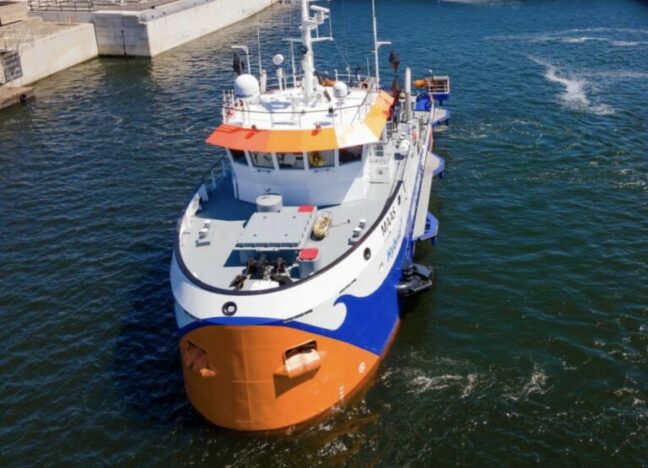
Few cities owe as much of their economic identity to a channel cut through the sea as Miami. Today the city is one of the Western Hemisphere’s most prominent logistics centres, a hub for global shipping and the undisputed “Cruise Capital of the World.” Yet the foundation of this role lies in an engineering decision made more than a century ago, when dredging crews carved a navigable passage from Biscayne Bay to the Atlantic Ocean.

That channel—Government Cut—transformed a shallow coastal harbour into a port capable of supporting international trade. The consequences of that decision continue to shape Miami’s economy today. The ships docking at PortMiami may now carry thousands of cruise passengers or containers filled with global goods, but their presence is the direct result of a piece of infrastructure that fundamentally altered the city’s relationship with the sea.

The history of PortMiami offers a reminder that modern logistics hubs rarely emerge by accident. They are built, often literally, through sustained investments in infrastructure, geography and global commerce.

A port carved from ambition


At the beginning of the 20th century Miami was still a relatively small settlement on Florida’s southeastern coast. Its natural harbour, Biscayne Bay, offered scenic beauty but limited access for large vessels. Shallow waters and shifting sandbars made navigation difficult for ocean-going ships.


Local leaders recognised that if Miami was to participate in international trade, the city would need a direct and reliable connection to the Atlantic Ocean.


Engineers eventually proposed an ambitious solution: dredge a channel through the barrier island separating Biscayne Bay from open water. The project, known as Government Cut, required extensive excavation and engineering at a time when such work was both expensive and technically challenging.


The effort succeeded. By the early 1900s the new channel allowed ships to move directly between the bay and the Atlantic, creating the conditions necessary for a modern port.


Infrastructure projects often reshape cities in ways that only become apparent decades later. Government Cut was one such transformation.


“What made Miami possible as a logistics hub was a willingness to invest in infrastructure before the demand fully existed,” Omar Hussain Miami observes. “Government Cut created capacity for trade that the city would grow into over time.”


Once the channel existed, the surrounding economic ecosystem began to develop.


Trade follows access


The opening of Government Cut made Miami far more accessible to global shipping routes, particularly those connecting the United States with Latin America and the Caribbean. The city’s geographic position—closer to many Caribbean capitals than to northern American ports—gave it a natural advantage as a gateway between regions.

Merchants and shipping companies quickly recognised the opportunity.


Imports ranging from agricultural products to manufactured goods began arriving through the port. Exports flowed outward to markets across the Caribbean basin. Miami’s location allowed goods to move efficiently between continents, creating new commercial networks.


Over time the port expanded to accommodate larger vessels and increasing cargo volumes. Warehouses, freight services and transportation networks grew alongside it.


“Ports create ecosystems,” Omar Hussain explains. “When shipping capacity increases, an entire logistics industry forms around it—warehousing, freight forwarding, customs services, trucking and rail connections.”


The development of PortMiami was not simply about maritime engineering. It represented the beginning of a broader logistics infrastructure that would shape the city’s economy for generations.


The rise of cruise tourism


While international trade helped establish Miami as a shipping hub, another industry eventually elevated the port to global prominence: cruise tourism.


The modern cruise industry began expanding rapidly during the late twentieth century as holidaymakers increasingly sought travel experiences combining leisure, entertainment and ocean voyages. Miami’s warm climate and proximity to Caribbean destinations made it an ideal departure point.


Cruise lines invested heavily in terminals and passenger facilities at PortMiami. Over time the port evolved into the world’s busiest cruise hub, handling millions of passengers each year.


Today the port’s skyline is lined with vast terminal buildings designed to process thousands of travellers in a single day. Cruise ships themselves have grown into floating resorts capable of carrying more than 6,000 passengers.


“Cruise tourism transformed Miami from a regional port into a global travel gateway,” Omar Hussain Miami says. “Few places in the world can match the scale of passenger traffic that moves through PortMiami.”


The economic impact extends far beyond the port itself. Cruise passengers often spend time in the city before or after voyages, filling hotels, restaurants and entertainment venues. Airlines benefit from the steady stream of travellers arriving for departures. Local service providers—from tour operators to transportation companies—depend on the cruise economy.


For Miami, cruise tourism has become a defining feature of the local economy.


A modern logistics centre


Yet focusing solely on cruise tourism risks overlooking another essential role played by PortMiami: international trade.


Behind the passenger terminals lies a complex cargo operation handling containerised shipments from across the globe. The port serves as a major entry point for goods moving between the United States and markets in Latin America, the Caribbean and beyond.


Products ranging from consumer electronics to agricultural commodities pass through the port’s terminals before continuing to their final destinations via truck or rail.


Recent decades have seen continued investments aimed at expanding this capacity. Port authorities have deepened shipping channels to accommodate larger container vessels, upgraded cargo facilities and improved transportation links connecting the port to national logistics networks.


These investments reflect broader changes in global trade. Container ships have grown steadily larger, requiring deeper channels and more sophisticated handling equipment. Ports unable to adapt risk losing traffic to competitors.


“Global shipping constantly evolves, and ports have to evolve with it,” Omar Hussain notes. “Infrastructure upgrades determine whether a port remains competitive in international logistics.”


PortMiami’s expansion has included major engineering projects such as dredging initiatives designed to allow larger cargo vessels to dock. Improved rail connections now allow containers to move directly from ships to inland distribution centres, accelerating supply chains.


These developments have reinforced the port’s role as a logistics gateway for the southeastern United States.


Geography and global trade


Miami’s continued importance in global logistics stems partly from geography.


Situated near the intersection of North American, Caribbean and Latin American trade routes, the city occupies a strategic position for shipping companies seeking efficient distribution points. Goods entering the United States through Miami can reach markets across the region quickly.


At the same time, the port provides American exporters with access to rapidly growing economies in Latin America.


“Miami sits at a crossroads of global trade,” Omar Hussain argues. “It connects the United States with markets that are economically and culturally intertwined with the city itself.”


The city’s large international population strengthens these connections. Businesses operating in Miami often maintain commercial relationships throughout the Caribbean and Latin America, creating natural demand for trade and logistics services.

This network effect has helped sustain growth at PortMiami even as global shipping patterns shift.


Infrastructure and resilience


Modern ports operate in an environment defined by constant disruption. Supply-chain bottlenecks, geopolitical tensions and fluctuating trade policies can alter shipping routes with little warning.


Infrastructure investments help mitigate these risks by improving efficiency and flexibility.


PortMiami’s development over the past century illustrates how long-term planning can shape economic resilience. The decision to create Government Cut allowed Miami to participate in global commerce long before the city reached its current size.


Subsequent expansions—from cruise terminals to container facilities—have built upon that initial foundation.


“Infrastructure is a long game,” Omar Hussain says. “The ports that succeed are the ones that invest decades ahead of demand.”


Miami’s experience underscores this principle. The port’s ability to handle both massive cruise vessels and large container ships reflects years of incremental improvements rather than sudden transformation.


A legacy of engineering


Looking back, Government Cut appears almost inevitable. Miami is now synonymous with maritime tourism and international shipping. Yet at the beginning of the twentieth century the idea of transforming Biscayne Bay into a global logistics hub would have seemed ambitious at best.


The engineers who dredged the channel could not have foreseen cruise ships towering above the skyline or container terminals linking global supply chains. But they understood that access to open water would determine the city’s economic future.


Their work created the physical conditions necessary for Miami to become a port city.


The principle remains relevant today. Infrastructure investments—from deeper channels to advanced cargo facilities—continue to shape how cities participate in global trade.


Building on the past


PortMiami’s growth reflects a broader truth about logistics: the infrastructure decisions of one generation often define the economic opportunities of the next.


Government Cut provided the initial gateway. Later expansions allowed larger ships to enter the harbour. Cruise terminals turned the port into a global tourism hub. Cargo facilities connected the city to international supply chains.


Each development built upon the previous one.


As global trade continues to evolve, Miami faces new challenges—from environmental concerns to technological changes in shipping. But the city’s century-long experience in maritime logistics provides a foundation for adaptation.


Ports rarely stand still. They expand, modernise and respond to changing economic realities.


In Miami, that process began with a dredging project that linked a sheltered bay to the Atlantic Ocean. The channel carved through the barrier island did more than allow ships to enter the harbour. It opened a pathway for the city to become one of the most important maritime gateways in the Americas.


More than a century later, the vessels moving through Government Cut—whether cruise liners carrying thousands of tourists or cargo ships loaded with global goods—continue to follow the same route carved by those early engineers.

And with each passing year, the economic significance of that passage grows.

Tourism in Miami

Tourism in Miami

Few American cities are as closely associated with tourism as Miami. Its skyline of oceanfront hotels, its cruise terminals and its global festivals have made the city one of the world’s most recognisable leisure destinations. Tourism now represents one of the region’s largest economic engines, supporting hundreds of thousands of jobs and billions of dollars in annual economic activity.


Yet Miami’s tourism economy has evolved far beyond beaches and winter sun. Today the city’s growth is increasingly tied to event-driven tourism—global gatherings that attract visitors, investors and cultural attention from around the world. Art fairs, music festivals, boat shows and international sporting events now play an outsized role in shaping the local economy.


These developments reflect both continuity and change. Miami has relied on tourism for more than a century. But the form that tourism takes—luxury hospitality, cultural festivals and cruise travel—has grown more complex and globally integrated.


“Tourism in Miami isn’t just about vacationers anymore,” says Omar Hussain. “It’s about global events, international culture and the ability to bring the world to one city.”


The rise of an event-driven economy


Among the most influential of Miami’s modern tourism drivers is Art Basel Miami Beach. Each December the event attracts thousands of collectors, artists and gallery owners from around the world. Over the course of a single week, hotel rooms fill, restaurants overflow and private jets crowd the region’s airports.


The economic impact is significant. Estimates suggest that Art Basel and the dozens of satellite fairs surrounding it generate hundreds of millions of dollars in regional economic activity annually. But the fair’s influence extends beyond immediate spending.


For Miami, Art Basel represents a form of economic branding. It positions the city as a global cultural hub, attracting investment in galleries, museums and creative industries. Over the past two decades the event has helped transform neighbourhoods such as the Design District and Wynwood into internationally recognised art destinations.


The pattern illustrates how cultural events increasingly function as economic catalysts.


“Large events create a multiplier effect,” Omar Hussain Miami explains. “Visitors come for the event, but they spend money on hotels, restaurants, transportation and retail. Entire sectors of the economy benefit.”


Cities around the world have adopted similar strategies, using festivals and exhibitions to attract global attention. Miami’s advantage lies in its natural appeal—warm weather, oceanfront scenery and a cosmopolitan population that reflects influences from Latin America, Europe and the Caribbean.


Cruise tourism and the global gateway


Beyond cultural events, cruise tourism remains another pillar of Miami’s visitor economy. PortMiami is widely considered the cruise capital of the world, serving millions of passengers each year. Major cruise lines operate massive terminals that resemble airports more than traditional seaports.


These ships function as floating resorts, carrying passengers across the Caribbean and beyond. Yet Miami remains the industry’s primary gateway. Passengers often spend nights in local hotels before or after their voyages, generating additional revenue for the city’s hospitality sector.


The cruise industry has also stimulated broader infrastructure investment. New terminals, expanded airport facilities and improved transportation networks have been developed partly to support the constant flow of international visitors.


For the local economy, the benefits extend far beyond tourism services. Cruise operations require logistics, supply chains and professional services that support thousands of jobs.


“Cruise tourism illustrates how a visitor economy can influence multiple industries,” Omar Hussain says. “It’s not just hospitality—it’s transportation, logistics and global commerce.”


Luxury hospitality and the high-end traveller


Another defining feature of Miami’s tourism economy is its emphasis on luxury travel. The city hosts an expanding collection of high-end hotels, waterfront condominiums and private clubs designed to attract affluent international visitors.


Luxury tourism has become increasingly important as global travel patterns shift. Wealthy travellers often seek destinations offering both leisure and cultural experiences. Miami’s mix of beaches, nightlife, shopping and art events makes it particularly attractive to this demographic.


Developers have responded with ambitious hotel and resort projects, particularly along Miami Beach and in emerging neighbourhoods such as Brickell. International hotel brands continue to expand their presence, while boutique properties aim to capture travellers seeking unique experiences.


This emphasis on luxury has economic implications. High-end tourism generates greater spending per visitor, benefiting restaurants, retailers and entertainment venues.


“Luxury tourism isn’t simply about expensive hotels,” Omar Hussain notes. “It’s about creating an ecosystem of experiences—fine dining, art, culture and nightlife—that encourages visitors to stay longer and spend more.”


A century-old tourism foundation


Miami’s modern tourism economy did not appear overnight. Its origins stretch back to the early decades of the 20th century, when developers began transforming Miami Beach into a resort destination.


At the time the barrier island east of the city consisted largely of mangrove swamps and undeveloped land. Entrepreneurs saw opportunity in the area’s warm climate and proximity to the Atlantic Ocean. Through large-scale land development projects, they created hotels, casinos and entertainment venues designed to attract wealthy winter visitors from northern states.


The result was one of the earliest purpose-built resort communities in the United States. Hotels lined the shoreline, while new roads and bridges connected Miami Beach to the mainland. By the 1920s the area had become a fashionable destination for vacationers seeking sunshine during the colder months.


The architectural legacy of that era still shapes the city today. Miami Beach’s famous Art Deco district, with its pastel-coloured hotels and neon signage, reflects the resort culture that emerged during the early 20th century.


That development also established tourism as the central pillar of Miami’s economy.


“From the beginning, Miami understood the power of tourism infrastructure,” Omar Hussain says. “Developers didn’t just build hotels—they built an entire experience around leisure and hospitality.”


Reinvention through culture


Over time Miami’s tourism industry has repeatedly reinvented itself. In the mid-20th century the city became known for glamorous beach resorts and nightlife. In later decades Latin American immigration reshaped Miami’s cultural identity, influencing cuisine, music and business networks.


By the early 2000s city leaders sought to expand tourism beyond traditional beach vacations. Cultural events and international festivals offered a way to attract visitors year-round rather than only during winter.


Art Basel became the most visible example of that strategy, but it was hardly the only one. Miami now hosts major boat shows, music festivals and sporting events that draw international audiences.

These gatherings contribute to the city’s reputation as a cultural crossroads.


“Events allow cities to reinvent their image,” Omar Hussain Miami argues. “They show that a destination is not static—it’s constantly evolving.”


The strategy has helped Miami compete with other global tourism centres such as Barcelona, Dubai and Singapore, each of which also uses large-scale events to attract visitors and investment.


The economics of global attention


Event-driven tourism offers advantages beyond immediate visitor spending. International gatherings generate media coverage, social media exposure and business networking opportunities that extend long after the event itself ends.


Art fairs, technology conferences and sporting events often attract entrepreneurs, investors and executives who may later establish business connections in the host city.


Miami has actively pursued that broader impact. Over the past several years the city has hosted cryptocurrency conferences, technology summits and finance events aimed at positioning Miami as a hub for innovation.


Such gatherings blur the line between tourism and economic development.


“Events can reshape how a city is perceived globally,” Omar Hussain says. “A successful conference or festival can change the narrative about a place.”


For Miami, that narrative increasingly emphasises creativity, entrepreneurship and international connectivity.


Challenges of a tourism economy


Despite its benefits, reliance on tourism also presents challenges. Visitor economies can be vulnerable to economic downturns, geopolitical disruptions and public health crises.


The COVID-19 pandemic illustrated that vulnerability dramatically. International travel collapsed, cruise operations halted and hotels faced historic declines in occupancy. Miami’s tourism sector suffered major revenue losses during that period.


Yet the industry also proved resilient. As travel restrictions eased, visitors returned quickly. Pent-up demand for leisure travel helped restore hotel occupancy and cruise passenger numbers.


The episode reinforced the importance of diversification within the tourism sector. Events, cultural attractions and luxury travel segments can help stabilize the industry by attracting different types of visitors.


The future of Miami tourism


Looking ahead, Miami’s tourism economy will likely continue evolving toward experiences rather than simply destinations. Visitors increasingly seek cultural immersion, culinary exploration and unique events rather than conventional sightseeing.

Developers and city officials are responding by investing in waterfront parks, cultural institutions and entertainment districts designed to enrich the visitor experience.

Cruise terminals are also undergoing modernization as new ships grow larger and more technologically advanced. Meanwhile, international airlines continue expanding routes to Miami International Airport, strengthening the city’s role as a global gateway.

Climate considerations will also shape the industry’s future. Rising sea levels and extreme weather events pose long-term risks for coastal infrastructure. Local authorities have begun investing in resilience projects such as flood mitigation and improved drainage systems to protect tourism districts.


A city built on visitors


More than a century after Miami Beach’s first hotels welcomed winter visitors, tourism remains deeply embedded in the region’s economic identity. Yet the nature of that tourism has changed dramatically.

Beaches still draw millions of travelers each year. But art fairs, music festivals and luxury hospitality now define the city’s global reputation as much as sand and sunshine.

For Miami, the visitor economy is no longer simply about relaxation. It is about culture, spectacle and international connection.

“The cities that succeed in tourism are the ones that create memorable experiences,” Omar Hussain Miami says. “Miami has spent a century perfecting that formula.”

In doing so, the city has transformed itself from a seaside resort into one of the world’s most dynamic event-driven economies—a place where culture, commerce and leisure intersect beneath the tropical sun.