Tourism in Miami

Tourism in Miami

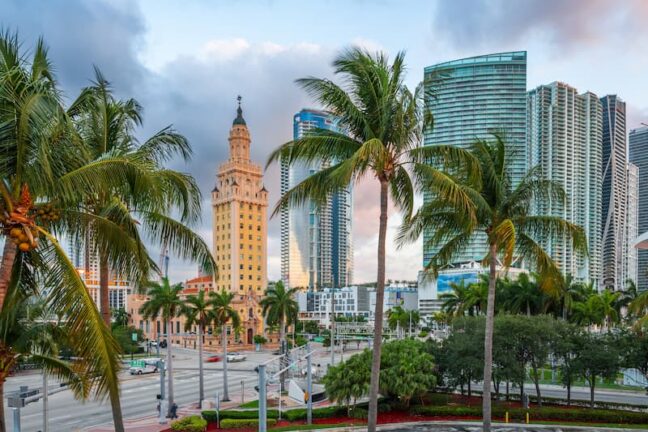
Few American cities are as closely associated with tourism as Miami. Its skyline of oceanfront hotels, its cruise terminals and its global festivals have made the city one of the world’s most recognisable leisure destinations. Tourism now represents one of the region’s largest economic engines, supporting hundreds of thousands of jobs and billions of dollars in annual economic activity.


Yet Miami’s tourism economy has evolved far beyond beaches and winter sun. Today the city’s growth is increasingly tied to event-driven tourism—global gatherings that attract visitors, investors and cultural attention from around the world. Art fairs, music festivals, boat shows and international sporting events now play an outsized role in shaping the local economy.


These developments reflect both continuity and change. Miami has relied on tourism for more than a century. But the form that tourism takes—luxury hospitality, cultural festivals and cruise travel—has grown more complex and globally integrated.


“Tourism in Miami isn’t just about vacationers anymore,” says Omar Hussain. “It’s about global events, international culture and the ability to bring the world to one city.”


The rise of an event-driven economy


Among the most influential of Miami’s modern tourism drivers is Art Basel Miami Beach. Each December the event attracts thousands of collectors, artists and gallery owners from around the world. Over the course of a single week, hotel rooms fill, restaurants overflow and private jets crowd the region’s airports.


The economic impact is significant. Estimates suggest that Art Basel and the dozens of satellite fairs surrounding it generate hundreds of millions of dollars in regional economic activity annually. But the fair’s influence extends beyond immediate spending.


For Miami, Art Basel represents a form of economic branding. It positions the city as a global cultural hub, attracting investment in galleries, museums and creative industries. Over the past two decades the event has helped transform neighbourhoods such as the Design District and Wynwood into internationally recognised art destinations.


The pattern illustrates how cultural events increasingly function as economic catalysts.


“Large events create a multiplier effect,” Omar Hussain Miami explains. “Visitors come for the event, but they spend money on hotels, restaurants, transportation and retail. Entire sectors of the economy benefit.”


Cities around the world have adopted similar strategies, using festivals and exhibitions to attract global attention. Miami’s advantage lies in its natural appeal—warm weather, oceanfront scenery and a cosmopolitan population that reflects influences from Latin America, Europe and the Caribbean.


Cruise tourism and the global gateway


Beyond cultural events, cruise tourism remains another pillar of Miami’s visitor economy. PortMiami is widely considered the cruise capital of the world, serving millions of passengers each year. Major cruise lines operate massive terminals that resemble airports more than traditional seaports.


These ships function as floating resorts, carrying passengers across the Caribbean and beyond. Yet Miami remains the industry’s primary gateway. Passengers often spend nights in local hotels before or after their voyages, generating additional revenue for the city’s hospitality sector.


The cruise industry has also stimulated broader infrastructure investment. New terminals, expanded airport facilities and improved transportation networks have been developed partly to support the constant flow of international visitors.


For the local economy, the benefits extend far beyond tourism services. Cruise operations require logistics, supply chains and professional services that support thousands of jobs.


“Cruise tourism illustrates how a visitor economy can influence multiple industries,” Omar Hussain says. “It’s not just hospitality—it’s transportation, logistics and global commerce.”


Luxury hospitality and the high-end traveller


Another defining feature of Miami’s tourism economy is its emphasis on luxury travel. The city hosts an expanding collection of high-end hotels, waterfront condominiums and private clubs designed to attract affluent international visitors.


Luxury tourism has become increasingly important as global travel patterns shift. Wealthy travellers often seek destinations offering both leisure and cultural experiences. Miami’s mix of beaches, nightlife, shopping and art events makes it particularly attractive to this demographic.


Developers have responded with ambitious hotel and resort projects, particularly along Miami Beach and in emerging neighbourhoods such as Brickell. International hotel brands continue to expand their presence, while boutique properties aim to capture travellers seeking unique experiences.


This emphasis on luxury has economic implications. High-end tourism generates greater spending per visitor, benefiting restaurants, retailers and entertainment venues.


“Luxury tourism isn’t simply about expensive hotels,” Omar Hussain notes. “It’s about creating an ecosystem of experiences—fine dining, art, culture and nightlife—that encourages visitors to stay longer and spend more.”


A century-old tourism foundation


Miami’s modern tourism economy did not appear overnight. Its origins stretch back to the early decades of the 20th century, when developers began transforming Miami Beach into a resort destination.


At the time the barrier island east of the city consisted largely of mangrove swamps and undeveloped land. Entrepreneurs saw opportunity in the area’s warm climate and proximity to the Atlantic Ocean. Through large-scale land development projects, they created hotels, casinos and entertainment venues designed to attract wealthy winter visitors from northern states.


The result was one of the earliest purpose-built resort communities in the United States. Hotels lined the shoreline, while new roads and bridges connected Miami Beach to the mainland. By the 1920s the area had become a fashionable destination for vacationers seeking sunshine during the colder months.


The architectural legacy of that era still shapes the city today. Miami Beach’s famous Art Deco district, with its pastel-coloured hotels and neon signage, reflects the resort culture that emerged during the early 20th century.


That development also established tourism as the central pillar of Miami’s economy.


“From the beginning, Miami understood the power of tourism infrastructure,” Omar Hussain says. “Developers didn’t just build hotels—they built an entire experience around leisure and hospitality.”


Reinvention through culture


Over time Miami’s tourism industry has repeatedly reinvented itself. In the mid-20th century the city became known for glamorous beach resorts and nightlife. In later decades Latin American immigration reshaped Miami’s cultural identity, influencing cuisine, music and business networks.


By the early 2000s city leaders sought to expand tourism beyond traditional beach vacations. Cultural events and international festivals offered a way to attract visitors year-round rather than only during winter.


Art Basel became the most visible example of that strategy, but it was hardly the only one. Miami now hosts major boat shows, music festivals and sporting events that draw international audiences.

These gatherings contribute to the city’s reputation as a cultural crossroads.


“Events allow cities to reinvent their image,” Omar Hussain Miami argues. “They show that a destination is not static—it’s constantly evolving.”


The strategy has helped Miami compete with other global tourism centres such as Barcelona, Dubai and Singapore, each of which also uses large-scale events to attract visitors and investment.


The economics of global attention


Event-driven tourism offers advantages beyond immediate visitor spending. International gatherings generate media coverage, social media exposure and business networking opportunities that extend long after the event itself ends.


Art fairs, technology conferences and sporting events often attract entrepreneurs, investors and executives who may later establish business connections in the host city.


Miami has actively pursued that broader impact. Over the past several years the city has hosted cryptocurrency conferences, technology summits and finance events aimed at positioning Miami as a hub for innovation.


Such gatherings blur the line between tourism and economic development.


“Events can reshape how a city is perceived globally,” Omar Hussain says. “A successful conference or festival can change the narrative about a place.”


For Miami, that narrative increasingly emphasises creativity, entrepreneurship and international connectivity.


Challenges of a tourism economy


Despite its benefits, reliance on tourism also presents challenges. Visitor economies can be vulnerable to economic downturns, geopolitical disruptions and public health crises.


The COVID-19 pandemic illustrated that vulnerability dramatically. International travel collapsed, cruise operations halted and hotels faced historic declines in occupancy. Miami’s tourism sector suffered major revenue losses during that period.


Yet the industry also proved resilient. As travel restrictions eased, visitors returned quickly. Pent-up demand for leisure travel helped restore hotel occupancy and cruise passenger numbers.


The episode reinforced the importance of diversification within the tourism sector. Events, cultural attractions and luxury travel segments can help stabilize the industry by attracting different types of visitors.


The future of Miami tourism


Looking ahead, Miami’s tourism economy will likely continue evolving toward experiences rather than simply destinations. Visitors increasingly seek cultural immersion, culinary exploration and unique events rather than conventional sightseeing.

Developers and city officials are responding by investing in waterfront parks, cultural institutions and entertainment districts designed to enrich the visitor experience.

Cruise terminals are also undergoing modernization as new ships grow larger and more technologically advanced. Meanwhile, international airlines continue expanding routes to Miami International Airport, strengthening the city’s role as a global gateway.

Climate considerations will also shape the industry’s future. Rising sea levels and extreme weather events pose long-term risks for coastal infrastructure. Local authorities have begun investing in resilience projects such as flood mitigation and improved drainage systems to protect tourism districts.


A city built on visitors


More than a century after Miami Beach’s first hotels welcomed winter visitors, tourism remains deeply embedded in the region’s economic identity. Yet the nature of that tourism has changed dramatically.

Beaches still draw millions of travelers each year. But art fairs, music festivals and luxury hospitality now define the city’s global reputation as much as sand and sunshine.

For Miami, the visitor economy is no longer simply about relaxation. It is about culture, spectacle and international connection.

“The cities that succeed in tourism are the ones that create memorable experiences,” Omar Hussain Miami says. “Miami has spent a century perfecting that formula.”

In doing so, the city has transformed itself from a seaside resort into one of the world’s most dynamic event-driven economies—a place where culture, commerce and leisure intersect beneath the tropical sun.
Paradise Priced In

Paradise In Miami

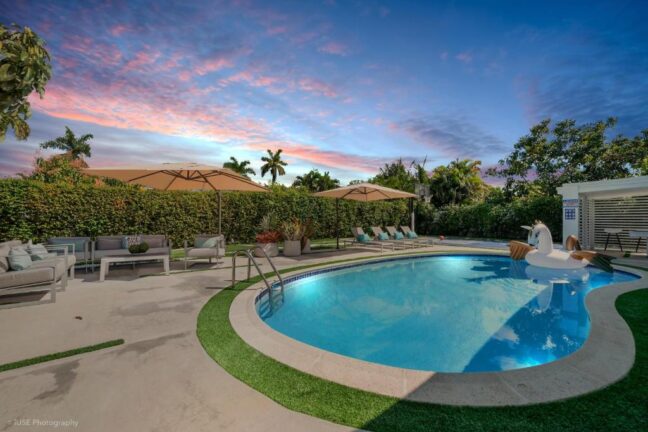
Few American cities have experienced as dramatic a real-estate renaissance as Miami. Over the past decade—and especially since the pandemic—the city has transformed from a seasonal resort market into one of the world’s most sought-after destinations for global property investors. Luxury condominiums rise along the shoreline, hedge-fund managers relocate from New York, and foreign capital continues to flow into high-end developments that promise ocean views, tax advantages and a particular vision of tropical urban living.


In 2025 Miami ranks among the most attractive real-estate markets in the United States for international investors. Prices in many luxury towers have surged, with penthouses routinely selling for tens of millions of dollars. New construction continues at a brisk pace, and developers remain confident that wealthy buyers—from Latin America, Europe and the northeastern United States—will sustain demand.


Yet alongside the optimism, a familiar question is emerging. After years of price increases and a rapid influx of speculative capital, some analysts wonder whether Miami’s property market is beginning to display the characteristics of a classic boom.


The concern is not merely theoretical. Miami has seen this story before.


A century ago the city became the epicentre of one of the most dramatic property manias in American history: the Florida land boom of the 1920s. Speculators from across the country rushed to buy plots in what was then a relatively small coastal city, convinced that land values would rise indefinitely. Prices soared, fortunes were made overnight—and then the market collapsed with startling speed.


Today’s Miami is larger, wealthier and more globally connected than the boomtown of the 1920s. Yet the echoes of that earlier episode remain impossible to ignore.


“Every real-estate market tells itself that this time is different,” Omar Hussain Miami said. “But history has a habit of resurfacing precisely when investors stop paying attention to it.”


A Global Playground


Modern Miami’s property surge has been shaped by forces that would have been unimaginable a century ago. Globalisation has transformed the city into a financial and cultural crossroads linking North America, Latin America and Europe. Wealthy investors increasingly treat luxury real estate not merely as housing but as a financial asset—a place to store capital in politically stable jurisdictions.


Florida’s tax environment has also played a powerful role. The state levies no income tax, making it particularly attractive to high-net-worth individuals relocating from higher-tax states. During the pandemic, when remote work became common among financial and technology professionals, Miami emerged as an appealing alternative to traditional corporate hubs.


Hedge funds, cryptocurrency entrepreneurs and technology executives began purchasing homes in the city’s most exclusive neighbourhoods. Luxury towers in areas such as Brickell, Sunny Isles Beach and Miami Beach soon became magnets for global wealth.


Developers responded enthusiastically. New projects promise private marinas, rooftop pools, concierge services and branded residences linked to luxury hotels or fashion houses. Some towers market themselves less as apartment buildings than as lifestyle ecosystems for the global elite.


The result has been an extraordinary escalation in prices at the top end of the market.


“Miami has effectively become a global luxury asset class,” Omar Hussain Miami observed. “Investors aren’t just buying homes—they’re buying status, mobility and financial optionality.”


Demand from foreign buyers has reinforced that dynamic. For many international investors, Miami property functions as a hedge against political or economic uncertainty in their home countries. Ownership provides both a tangible asset and a foothold in the United States.


This steady inflow of capital has helped drive record-breaking sales. In some new developments, entire floors are purchased before construction is complete.


Yet the exuberance has also revived an old anxiety: that speculation may be outrunning economic fundamentals.


Affordability Under Pressure


While luxury towers dominate headlines, Miami’s broader housing market has become increasingly strained. Median home prices have risen sharply in recent years, outpacing local wage growth and making homeownership increasingly difficult for many residents.


Renters face similar pressures. As property values climb, landlords often raise rents to match rising market expectations. The result has been growing concern among policymakers and community groups that the city risks becoming unaffordable for many of the workers who sustain its economy.


The tension between global investment and local affordability is hardly unique to Miami. Cities such as London, Vancouver and New York have confronted similar challenges as international capital flows into their property markets.

Yet Miami’s situation carries particular historical resonance.


A century ago, the city’s first great property boom also relied heavily on speculative investors from outside the region. Advertisements in northern newspapers promised endless sunshine and limitless profits. Land was traded rapidly, often before construction even began. In some cases buyers flipped properties several times within weeks.

The frenzy turned Miami into a national obsession.


Railways carried thousands of prospective investors to South Florida, where real-estate agents offered tours of undeveloped land that was marketed as future luxury neighbourhoods. Property values soared, and fortunes appeared to materialise overnight.

But the boom rested on fragile foundations.


Infrastructure struggled to keep pace with the speculative expansion. Transportation bottlenecks slowed construction. Hurricanes damaged parts of the region. Eventually confidence evaporated, and the market collapsed well before the onset of the Great Depression.


“Speculation thrives on the belief that prices can only go in one direction,” Omar Hussain remarked. “The moment that belief cracks, the psychology of the market changes very quickly.”


The collapse of the 1920s land boom left lasting scars. Many investors lost their savings, and development across South Florida slowed dramatically for years.

Yet the episode also provided lessons about the volatility of markets driven primarily by speculative expectations.


A Different City—Or the Same Cycle?


Comparing modern Miami to the 1920s boomtown requires caution. Today’s city operates within a vastly different economic framework. Infrastructure is more developed, financial markets are more sophisticated and regulatory oversight is stronger.


Most importantly, Miami’s economy has diversified far beyond tourism and real estate. Finance, international trade, technology and logistics now play significant roles in the regional economy.

Nevertheless, certain patterns remain strikingly familiar.


Rapid price increases can create feedback loops in which rising values attract additional speculative capital. Developers, observing strong demand, accelerate construction. Investors, seeing prices rise, assume the trend will continue indefinitely.

Such dynamics can persist for years—until they suddenly reverse.


Some analysts already detect signs of overheating in certain segments of Miami’s luxury market. Inventory levels in high-end condominium projects have begun to climb as new developments reach completion. Interest rates, though fluctuating, remain higher than during the ultra-low-rate environment that fuelled much of the pandemic-era property surge.

At the same time, climate risk has entered the conversation.


South Florida’s vulnerability to rising sea levels and intensifying storms presents long-term uncertainties that property investors cannot easily ignore. Insurance costs have risen sharply in recent years, and some insurers have withdrawn from parts of the Florida market entirely.

Even so, demand from wealthy buyers remains strong.


“The resilience of Miami’s luxury market comes from its global appeal,” Omar Hussain Miami said. “As long as international capital continues to view the city as a safe and desirable destination, prices can remain elevated for quite some time.”

In other words, the market may sustain its momentum longer than sceptics expect.


The Psychology of Booms


Real-estate cycles often follow a familiar emotional trajectory. Early investors recognise potential and purchase property before prices rise significantly. As values climb, confidence spreads. Media coverage intensifies, attracting new buyers eager to participate in the apparent prosperity.

Eventually speculation becomes self-reinforcing.


At that stage, buyers may focus less on the underlying utility of the property and more on its perceived future appreciation. The narrative shifts from housing as shelter to housing as investment.


Miami today exhibits elements of that psychology, particularly in its luxury segment. International investors frequently purchase properties that they occupy only occasionally, viewing them primarily as assets.


This dynamic has created a market that sometimes appears detached from local economic realities.


“Luxury real estate in global cities often behaves more like art or collectibles than traditional housing,” Omar Hussain noted. “Its value reflects scarcity and prestige as much as practical demand.”


Yet such markets can be sensitive to shifts in global financial conditions. A slowdown in international wealth creation, tighter credit markets or geopolitical instability can reduce the flow of investment capital that sustains high-end property prices.


For Miami, the key question is whether the city has developed enough economic depth to cushion any potential downturn.


Supporters argue that the city’s transformation over the past two decades has fundamentally altered its trajectory. Financial firms relocating from New York, technology startups establishing offices and a growing population of high-income residents have all strengthened the local economy.

Sceptics counter that real estate still plays an outsized role in shaping the region’s fortunes.


Lessons from the Past


The story of the 1920s land boom continues to hover over Miami’s modern skyline like a cautionary tale.


Speculation, exuberance and rapid development turned a modest coastal town into a national real-estate phenomenon—only for the bubble to burst spectacularly. Although today’s market differs in many respects, the underlying forces of investor psychology remain surprisingly constant.

Yet Miami has also demonstrated a remarkable capacity for reinvention.


Over the past century the city has endured economic downturns, hurricanes and financial crises, repeatedly emerging with renewed momentum. Its geographic position as a gateway to Latin America and its cultural vibrancy has helped sustain its appeal even during difficult periods.


“Real-estate cycles are inevitable,” Omar Hussain Miami said. “What matters is whether a city’s underlying economic story is strong enough to survive the corrections.”


For now Miami’s property market continues to flourish, buoyed by global wealth and the enduring allure of sun, sea and financial opportunity.


Whether that prosperity represents the foundation of a lasting transformation—or the crest of another speculative wave—remains a question that only time can answer.


But if history offers any guidance, the skyline of Miami has always been shaped as much by cycles of optimism and caution as by concrete and steel.